


1.Martin Dresner, Professor, Logistics, Business and Public Policy Department, University of Maryland’s R.H. Smith School of Business, USA
2.Hongchang Li, Doctoral Supervisor, Shenzhen Institutes of Advanced Technology, Chinese Academy of Sciences, China
3.Daniel Zizzo, Daniel Zizzo, Professor of Economics, School of Economics, University of Queensland, Australia
4.Hong Yongmiao, Doctoral Supervisor,Dean of School of Economics and Management, University of Chinese Academy of Sciences.
5.Guowei Hua, Professor, The International Center for Informatics Research of Beijing Jiaotong University, China.
UPDATING……


Speaker:Martin Dresner
Emali:mdresner@umd.edu
Speaker’s biography :
Martin Dresner has served on the faculty of the University of Maryland’s R.H. Smith School of Business since 1988 where he is Dean’s Professor of Supply Chain Management. He has two areas of research, transport policy and supply chain management. Professionally, Dresner is Chair of the Air Transport Research Society (ATRS) and is on the Scientific and Steering Committees of the World Conference of Transport Research Society (WCTRS). He serves Co-Editor of the Journal of the Air Transport Research Society, as Senior Editor for the Journal of Business Logistics, and sits on several other editorial boards.
Keynote topic: Strategic Work-Break Scheduling and Job Performance for Food Safety Inspectors
Abstract:
An analysis is conducted of the impact of three types of positive work breaks and two types of negative work breaks on food safety inspector performance. Positive breaks include: pseudo breaks, defined as the time between inspections when the inspector is working on secondary tasks; within-assignment breaks, where breaks are scheduled in the middle of an assignment; and (3) fixed breaks, such as weekends for inspectors who work regular Monday to Friday schedules, where work resumes only after the fixed break ends. The two types of negative breaks include: (1) job creep, when assignments encroach on (normally) scheduled time off, typically when inspections are scheduled during weekends; and task overlap, when a concurrent assignment is made before the previous assignment is completed. Using data from 7,464 inspections of 3,291 food facilities conducted by 1,070 inspectors in the United States over an eight-year period, we find that the positive breaks are associated with the issuance of greater numbers of citations, while the negative breaks are associated with fewer citations. Moreover, we show decreasing marginal returns to positive breaks such that breaks that are “too long” are associated with reduced performance.

Speaker:Li Hongchang
Email:hchli@bjtu.edu.cn
Speaker’s biography:
Dr. Hongchang Li is a professor of transportation economics, Vice Dean of Sustainable Transport Innovation Center, Associate Dean and Associate Secretary General of the Party Committee, School of Economics and Management, Beijing Jiaotong University. His research interest is in economic analysis and policy for transport, in particular, high-speed rail and civil aviation and urban transit for achieving efficiency, equity and sustainability are among his research interest. His research has yielded more than 100 refereed papers and books in both English and Chinese in leading academic journals including Transportation Research Part A,D,E, Transport Research Record, Transport Policy, The Journal of Real Estate Finance and Economics, and etc. Dr. Li is the Executive Member of Technology Innovation and Strategy Management Research Center at China Academy of Social Sciences which is one of the top social science research body at home and abroad. He was appointed as the vice dean of Sustainable Transportation Innovation Center, of the national think tank, in 2020. He was elected to serve as the member of Boarder of Directors for Beijing Industrial Association, and the Transportation and Infrastructure Professional Committee of China Industrial Association. He established academic cooperation relationships with China Communication and Transportation Association (CCTA), China Railway Society (CRS), Chinese Society of Technology Economics (CSTE), China Highway & Transportation Society (CHTS). He is an expert in transportation economics and ranks among the top 30 in China according to Report on the Most Influential Chinese Scholars 2020. He did consultation and research projects for National Social Science Foundation (NSSF), National Development and Reform Commission (NDRC), Ministry of Transport (MOT), National Railway Administration (NRA), Civil Aviation Administration of China (CAAC) and etc. Dr. Li received his Ph.D. from the Beijing Jiaotong University which ranked No. 1 in transportation research field, his master’s degree in transportation economics also from Beijing Jiaotong University in 2000, and his bachelor’s degree from Beijing Science and Technology, Beijing China in 1995. He had railway working experience from 1995 to 1997 in Jinan Railway Bureau. During his current appointment as professor at Beijing Jiaotong University, he studied and did research on transportation and spatial economics at the University of Texas at Dallas in 2010. Dr. Li has received recognition from different institutions, including adjunct professor at Sejong University, South Korea, Best Paper Award by China Railway Society (CRS) and Chinese Society of Technology Economics (CSTE).
Keynote topic: Economic Restructuring, Factor Mobility, and National Environmental Security
Abstract:
Under the global climate change context, economic restructuring has emerged as a pivotal strategic approach for safeguarding national environmental security. Anchored in the environmental security imperatives constrained by the "dual carbon" goals, our study constructs a three-dimensional analytical framework encompassing "Factor mobility-Economic restructuring-Environmental effects". Utilizing a multi-regional input-output (MRIO) model, we quantify the interprovincial carbon footprints of 30 Chinese provinces for 2012, 2015, and 2017. Through integrated applications of spatial econometric models and gravity models, we systematically investigate how interregional factor flows (capital, population) and economic restructuring (industrial structure, factor composition, energy consumption mix) influence the spatial dependency of carbon footprints. Key findings reveal: (1) China's interprovincial carbon footprint network exhibits "Dual agglomeration-Strong coupling" characteristics, with eastern developed provinces (e.g., Guangdong, Jiangsu) serving as primary carbon footprint exporters and central-western energy-intensive provinces (e.g., Hebei, Inner Mongolia) as net importers. The spatial distribution demonstrates decentralization trends accompanying transportation infrastructure upgrades. (2) Factor mobility and economic restructuring significantly affect carbon footprint distribution through spatial spillover effects. Energy consumption restructuring demonstrates the most pronounced and robust driving effect on carbon footprints, while capital and population flows exacerbate interregional "carbon leakage" and high-carbon lock-in risks, highlighting regional coordination challenges in environmental governance. (3) Transportation infrastructure modernization weakens the geographical distance's inhibiting effect on carbon footprints, yet indirectly reduces carbon footprint network intensity by reshaping industrial chain spatial configurations.

Speaker:Daniel Zizzo
Email:d.zizzo@uq.edu.au
Speaker’s biography:
Professor Daniel Zizzo has been Academic Dean and Head of the School of Economics at The University of Queensland since 2018, having previously held professorial and leadership roles at the University of East Anglia and Newcastle University. He is an experimental and behavioral economist interested in pushing the boundaries of mainstream economics and in working across disciplinary boundaries. He has published articles in leading Economics journals including American Economic Review, American Economic Journal: Microeconomics, European Economic Review, Journal of Development Economics, Games and Economic Behavior, Experimental Economics, Journal of Economic Behavior and Organization, and more. He has also published articles outside Economics including in Computers in Human Behavior, Physica A, Risk Analysis and elsewhere. He has won the Kenneth J. Arrow Senior Prize for a paper on inferential expectations and the Experimental Economics Editor Award for a paper on experimental methodology. He is a long-standing Coordinating Editor of Theory and Decision and this year he has been offered a Guest Professor (Global) position at Keio University.
Keynote topic:Inattention and Inferential Expectations
Abstract:
Inattention and unawareness affect consumer, financial, environmental and other choices. I present a theory both of conservatism in updating beliefs and of abrupt shifts in beliefs – termed inferential expectations (IE) – to explain consumer choices, financial choices, and structural changes observed in economies. According to this theory, agents conduct hypothesis tests on economic fundamentals, holding firmly to their initial beliefs until the weight of contrarian evidence reaches a critical threshold, prompting a sudden and seemingly disproportionate revision of expectations. I explain the intuition behind this theory, refer to its microfoundations, provide empirical evidence, and list examples of some possible applications.
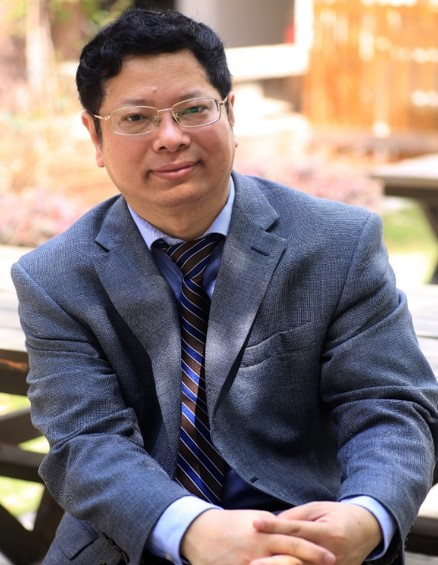
Speaker:Hong Yongmiao
Email:ymhong@amss.ac.cn
Speaker’s biography:
Yongmiao Hong is currently a Kwan Chao-Chih Chief Research Fellow at Academy of Mathematics and Systems Science, Chinese Academy of Sciences, and the Dean of School of Economics and Management, University of Chinese Academy of Sciences. He is a Fellow of the World Academy of Sciences, a Fellow of the Econometric Society, and a Vice Chairperson of Steering Committee for Economics Teaching in Higher Education under Chinese Ministry of Education. Professor Hong was the Ernest S. Liu Professor of Economics and International Studies at Cornell University from 2010 to 2020, and the President of Chinese Economists Society in North America from 2009 to 2010.
Professor Hong's research interests include econometric theory, time series econometrics, financial econometrics, and statistics. He has published referred papers in mainstream economic, financial and statistical journals such as Annals of Statistics, Biometrika, Econometric Theory, Econometrica, International Economic Review, Journal of American Statistical Association, Journal of Business and Economic Statistics, Journal of Econometrics, Journal of Political Economy, Journal of Royal Statistical Society (Series B), Quarterly Journal of Economics, Management Science, Review of Economic Studies, Review of Economics and Statistics, and Review of Financial Studies. His most recent English book is Foundations of Modern Econometrics: A Unified Approach. He has been listed among Most Cited Chinese Researchers in Economics/Statistics by Elsevier for 11 consecutive years from 2014 to 2024, and was awarded the first prize in the 2022 National Teaching Award for Higher Education (Undergraduate).
Keynote topic: High-dimensional Vector Autoregressions: A Ridge Dynamic Mode Decomposition Approach
Abstract:
This paper introduces a novel methodology for estimating high-dimensional vector autoregressive (VAR) models. We modify dynamic mode decomposition (DMD), originally developed for analyzing deterministic dynamics in fluid mechanics, to uncover latent low-dimensional structures in high-dimensional regression models, extending beyond traditional principal component analysis. Our approach capitalizes on information derived from the eigenspace of the transition matrix, enhancing the capacity to capture the intrinsic dynamic characteristics of the VAR system while effectively addressing both temporal and cross-sectional dependencies. We propose a truncated-ridge regularized DMD technique for estimating the high-dimensional transition matrix and demonstrate its advantageous large-sample properties. In an empirical application, we forecast inflation rates across 25 countries from 1995 to 2023 using our methodology. The findings reveal improved predictive accuracy and enhanced interpretability, offering a robust alternative and yielding new insights into the transmission mechanisms of international business cycle fluctuations.

Speaker:Guowei Hua
Email:gwhua@bjtu.edu.cn
Speaker’s biography:
Dr. Guowei Hua is the Executive Dean of the National Institute of Economic Security at Beijing Jiaotong University, full professor and doctoral supervisor at the School of Economics and Management, Senior Member of IEEE, and Chair of IEEE LIISS Committee. He has published about 100 papers in peer-reviewed journals and conference proceedings, including Production and Operations Management, European Journal of Operational Research, Omega, International Journal of Production Economic, International Journal of Production Research, Annal of Operations Research, Resources, Conservation and Recycling. He was named as a Highly Cited Scholar in China for five years consecutively from 2020-2024.
Keynote topic: industrial chain and supply chain
Abstract:
Firstly, compare the concepts of industrial chain and supply chain, and explore connection between their resilience and security, then explain their importance, and analyze their influencing factors, and provide suggestions on how to evaluate resilience and security. Finally, summarize strategies to enhance resilience and security.


- Deadline for submission of special session proposals: February 10, 2025 April 25, 2025
- Deadline for submission of regular and special session papers/abstracts: February 28, 2025 April 25, 2025
- Acceptance/rejection notification: March 31, 2025 May 10, 2025
- Registrations, and final camera-ready papers: May 25, 2025




 For more conference information,
please scan the Wechat code